If you're running a startup and thinking about your data setup - good news! Getting started is not that hard anymore, and you don't need a data specialist. This is how we did it at Steep.

1. What data? Backend data > events
I always advise folks to start using their backend data for metrics and analysis and only add events when there's no backend data available. In most cases, you should be able to solve 80-90% of your metrics and analysis using just a few core tables. Start with your users table and your core interaction table (i.e. your orders, bookings or streams depending on the business).
2. Your first data stack - BigQuery + Fivetran
The modern data stack has taken over the world, and there's an entry-level version that's great for startups. It's basically BigQuery as a database and Fivetran for syncing data. Fivetran can sync data from your backend db and has connectors to most SaaS tools, so you can just register any source and get data synced automatically to BigQuery. It's low effort and just works. And yes, you should use BigQuery even if you're on AWS (Snowflake is also fine).
3. Data pipelines
We data specialists like to use dbt for data modeling and pipelines, but for startups, this is overkill. Start with using your raw backend tables in BigQuery for analysis, and if you need to join some tables together, then just use database views for that. When things get more serious, you can easily add dbt to the stack for a more mature setup.
4. Use a modern analytics tool
Finally, (this is the plug zone) connect your data to a modern analytics tool that allows everyone to work with data together. Steep works great for a founding team, and you can get really far on the free tier. By adding your key metrics you will make data instantly available to everyone in your team. This helps you to move fast with a very lean setup. If you're looking to build your data culture early, there's no better place to start than Steep.
Book a demo
Get help with exploring the platform and discussing use cases for your team.
Get started
Explore for free. Get your own workspace or try the demo setup.
More posts

What is a semantic layer?
By Natasha Ellis-Knight·Data culture
Intro to Steep
By Janna Pollari·Events
Webinar with Daana
By Janna Pollari·Events
Meet us at Snowflake Summit 2026
By Deanne Anderson·Events
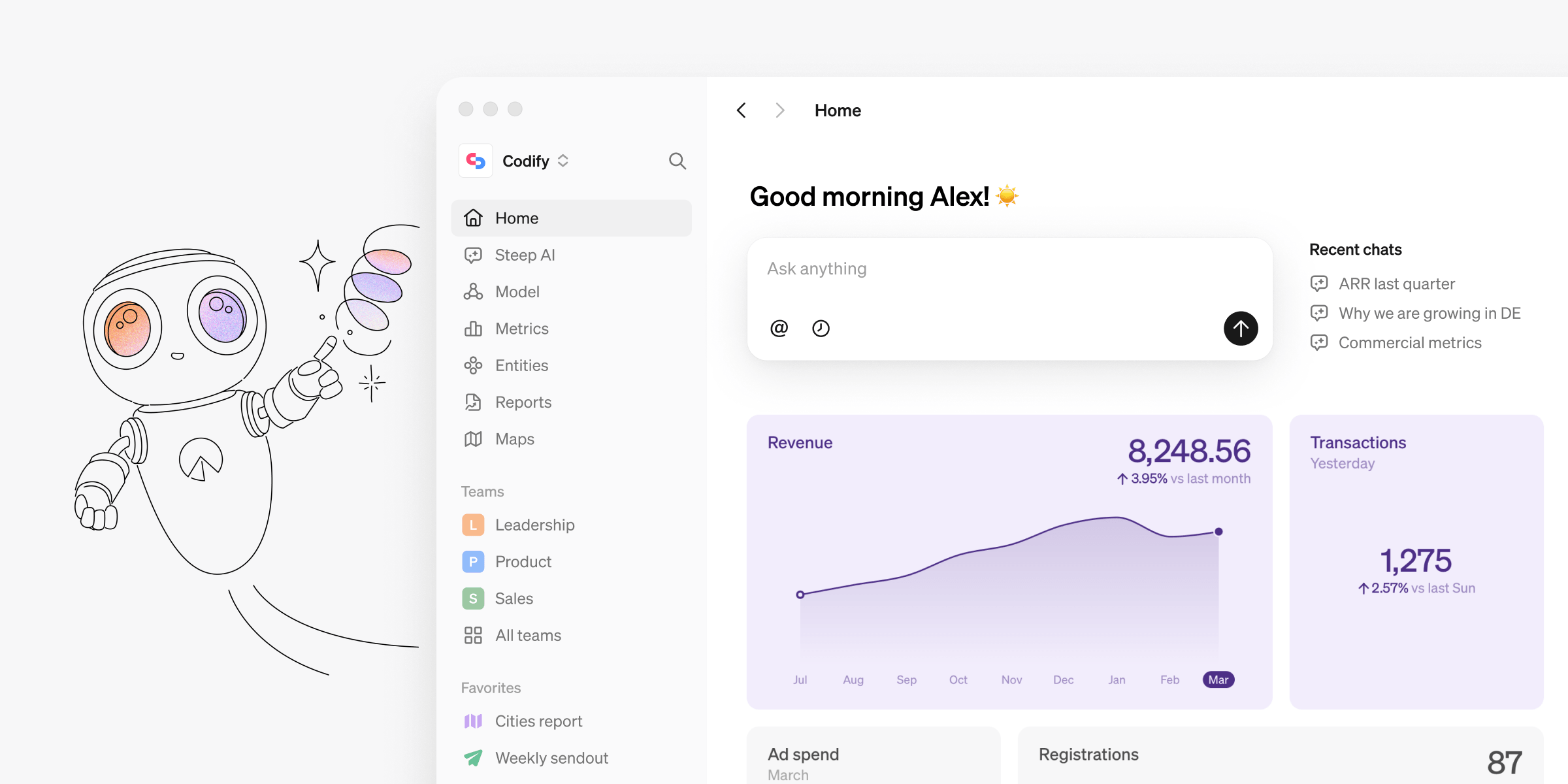
Introducing Steep AI
By Nino Höglund·Product

A builder's guide to the Steep API
By Hanna Kjellén·Inside Steep