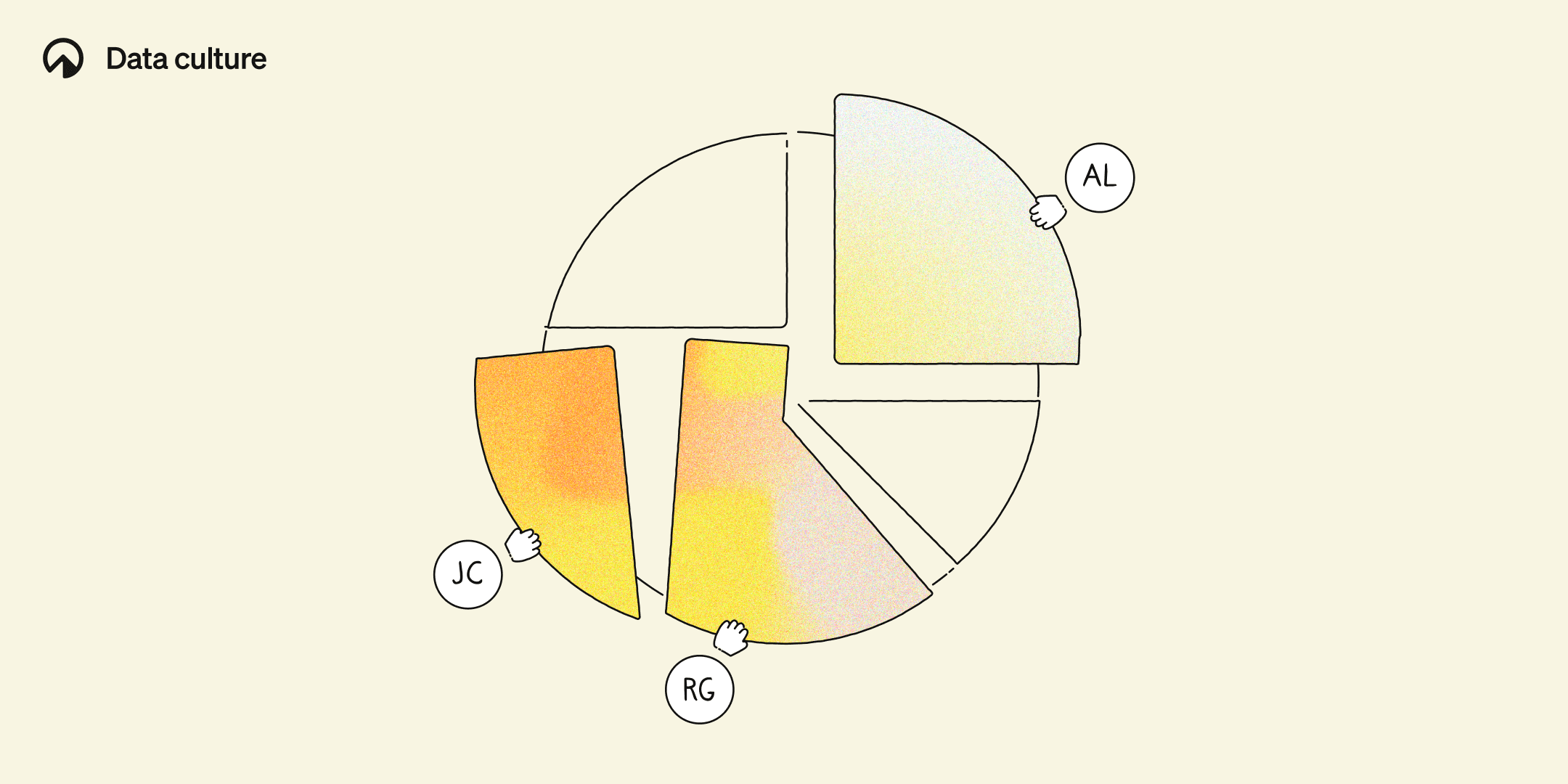
I’ve been an analytics leader three times over, and my friends - we sure didn't choose this job because it’s easy!

1. It’s everything from data stack to the management team
Analytics leaders need to manage and understand a mind-boggling range of topics - from the data stack, to analysis and maths, to high-level business and management. It’s rare to find people (unicorns) that have mastered the full range. Usually, folks come from one side - data or analysis+business - and, over time, develop their understanding of the full range.
If you only focus on data and tech, you’ll have limited impact on the business. If you only focus on business and analysis, you’ll never get the foundations in place the company needs to scale. The best leaders I’ve seen are constantly curious. They find great people to work with and learn from. They devote serious time to learning and stay connected with hands-on work.
2. Balancing speed and quality
To get value out of your data, you need to start using it, even if it’s imperfect. Analytics teams need to prove the value of data early and often. At the same time, you must invest in your foundations, data stack, and modeling to level up efficiency and reliability over time. Otherwise, you’ll forever be running in circles.
A trap to fall into is producing analysis and metrics and having stakeholders believe that the underlying process is more solid than it actually is. Since they don’t see how the output is produced, they often assume it’s all perfect underneath. This will come back to bite you.
Smart leaders encourage fast, clever use of the data they have, while clearly setting expectations of consistency and quality. While they deliver timely results, they invest heavily in getting really solid foundations for the future.
3. It’s also a relationship game
Analytics is one of the most collaborative functions in a tech company, and to be successful, you'll need to partner up with a large part of your organisation. Your analysts need to work closely with many other teams, data engineers have links to the tech org, and you, as a leader, must stay close to both the management team and department heads.
When done successfully, you can get alignment on budget and expectations, your team is working smoothly across the org, and you can build a data culture that’s anchored at the top. If you are under-investing in this, your job can quickly become impossible.
This can be a challenge, especially for first-time analytics leaders who often get to where they are by mastering their own domain.
Experienced leaders find good partners in the management team. They have a point of view on how to organize data & analytics, and they both support and challenge the other leaders in the company.
I’ve been an analytics leader for most of my career and never stopped being challenged. I think it’s one of the hardest and best jobs you can find!
Book a demo
Get help with exploring the platform and discussing use cases for your team.
Get started
Explore for free. Get your own workspace or try the demo setup.
More posts

Intro to Steep
By Janna Pollari·Events

Webinar with Daana
By Janna Pollari·Events

Meet us at Snowflake Summit 2026
By Deanne Anderson·Events
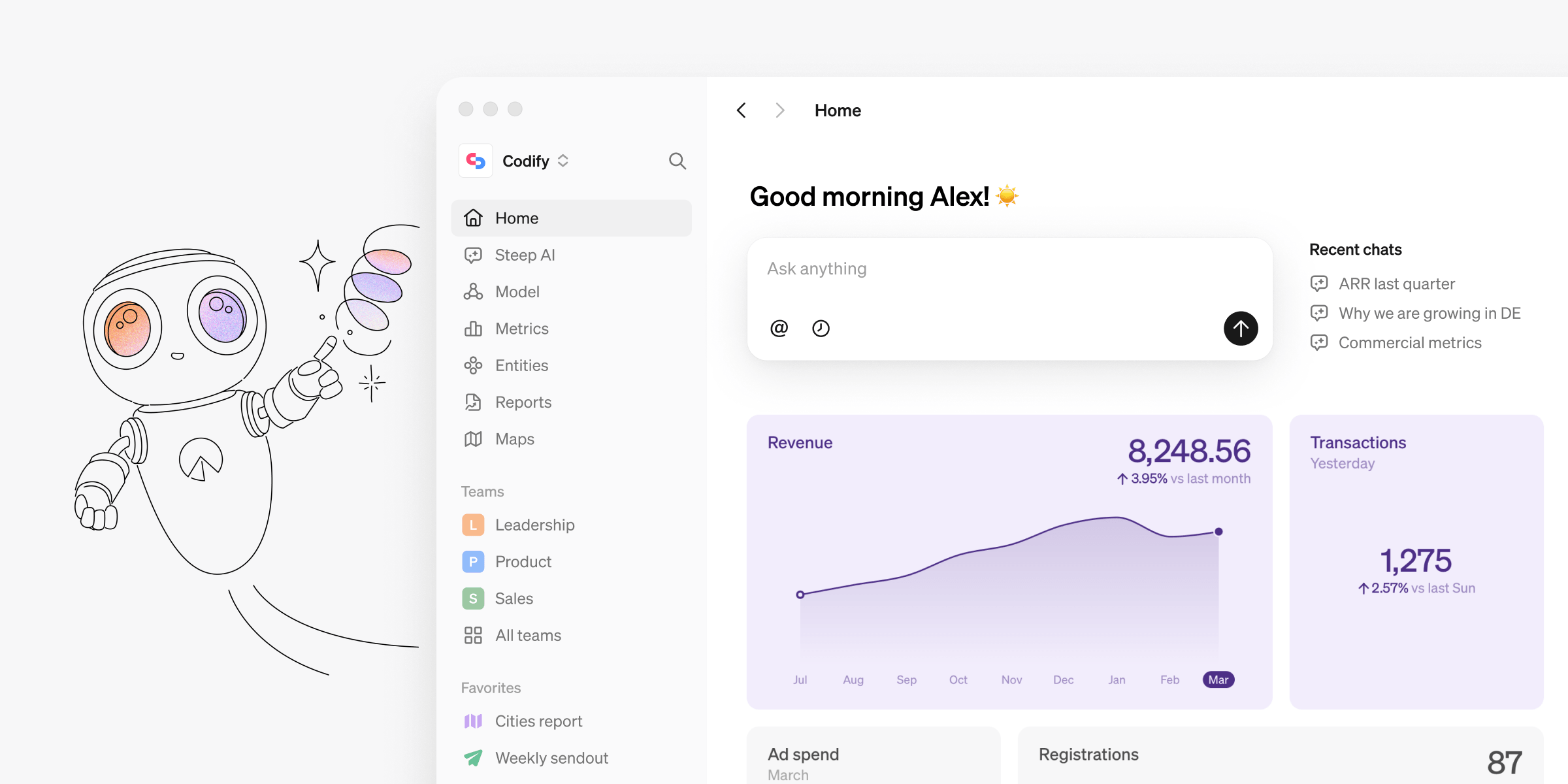
Introducing Steep AI
By Nino Höglund·Product

A builder's guide to the Steep API
By Hanna Kjellén·Inside Steep

New in Steep: API – Metrics power anything
By Nino Höglund·Product