Unlike the modern data stack, BI hasn't evolved much in the last ten years. Here's why the Semantic Layer is the new paradigm we need to serve the data-driven companies of the future.

For the past ten years, we've had an analyst-centric workflow in BI, where analysts answer questions from the business and build content for others. This model absolutely works (I myself have trained some 40 analysts over the years), but it has some clear downsides. Give someone a dashboard and they immediately come back with more questions. As the demand to use data keeps increasing, playing the old game (essentially throwing more humans at the problem) is getting less and less appealing. That's why we got really excited about doing BI on the semantic layer, as it opens up a new way to think about BI.
Semantic BI
With a semantic layer, you can build a catalog of metrics and ship that to the organization. Using BI tools that are built natively for metrics, you can provide an experience that is so intuitive and flexible that your end users can now do their own BI. That means they can explore and analyze but also create content all on their own.
That's a change with some big implications - it means that we in the data team can take a step back and focus on the data model and the semantic layer and that all our end users can now do much more BI work themselves. You're essentially giving your end users a very flexible sandbox that has built-in consistency and - with the right tooling - is really easy to work with. We're seeing many of our stakeholders quickly fall in love with the flexibility and user experience we can now give them.
The semantic stack - dbt, Cube & Steep
Now is an exciting time to get into the semantic movement. dbt labs launched its new semantic layer at Coalesce in October, the standalone alternative Cube has developed into a mature platform, and there are now tools like Steep that are built natively for the semantic layer. The technologies in this new stack work well together, and skills in one translate well over to alternatives. As of last year, you can realistically go all-in and serve even a large, data-hungry organization using this new paradigm.
Join the semantic movement
- Are you onboard the analytics engineering train?
- Do you need to serve a lot of data-hungry users in an efficient way?
- Are you curious about the semantic way of doing BI?
All good reasons to get started with your semantic layer and rethink your BI for the next era.
Book a demo
Get help with exploring the platform and discussing use cases for your team.
Get started
Explore for free. Get your own workspace or try the demo setup.
More posts

Intro to Steep
By Janna Pollari·Events
Webinar with Daana
By Janna Pollari·Events

Meet us at Snowflake Summit 2026
By Deanne Anderson·Events
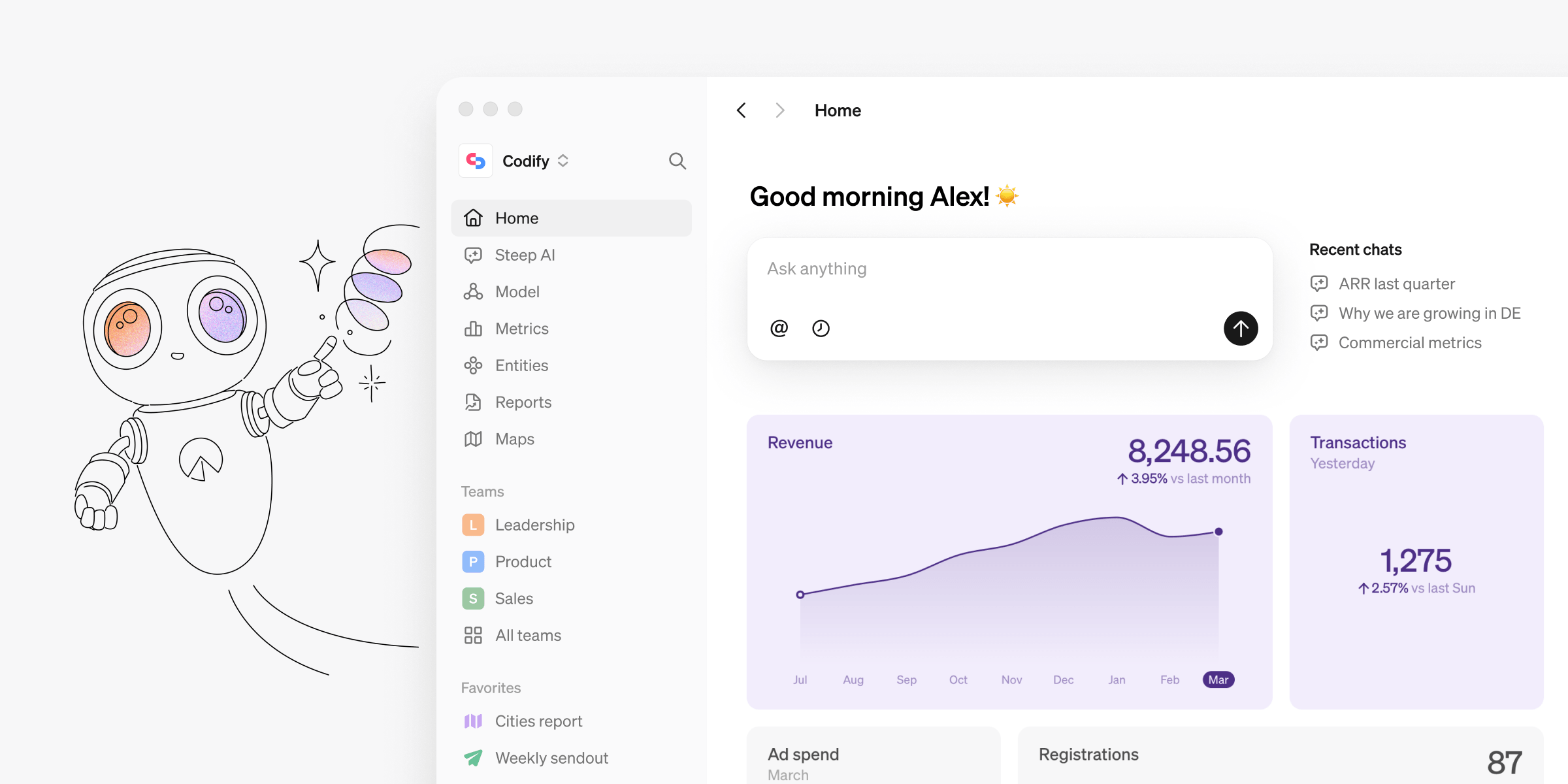
Introducing Steep AI
By Nino Höglund·Product

A builder's guide to the Steep API
By Hanna Kjellén·Inside Steep
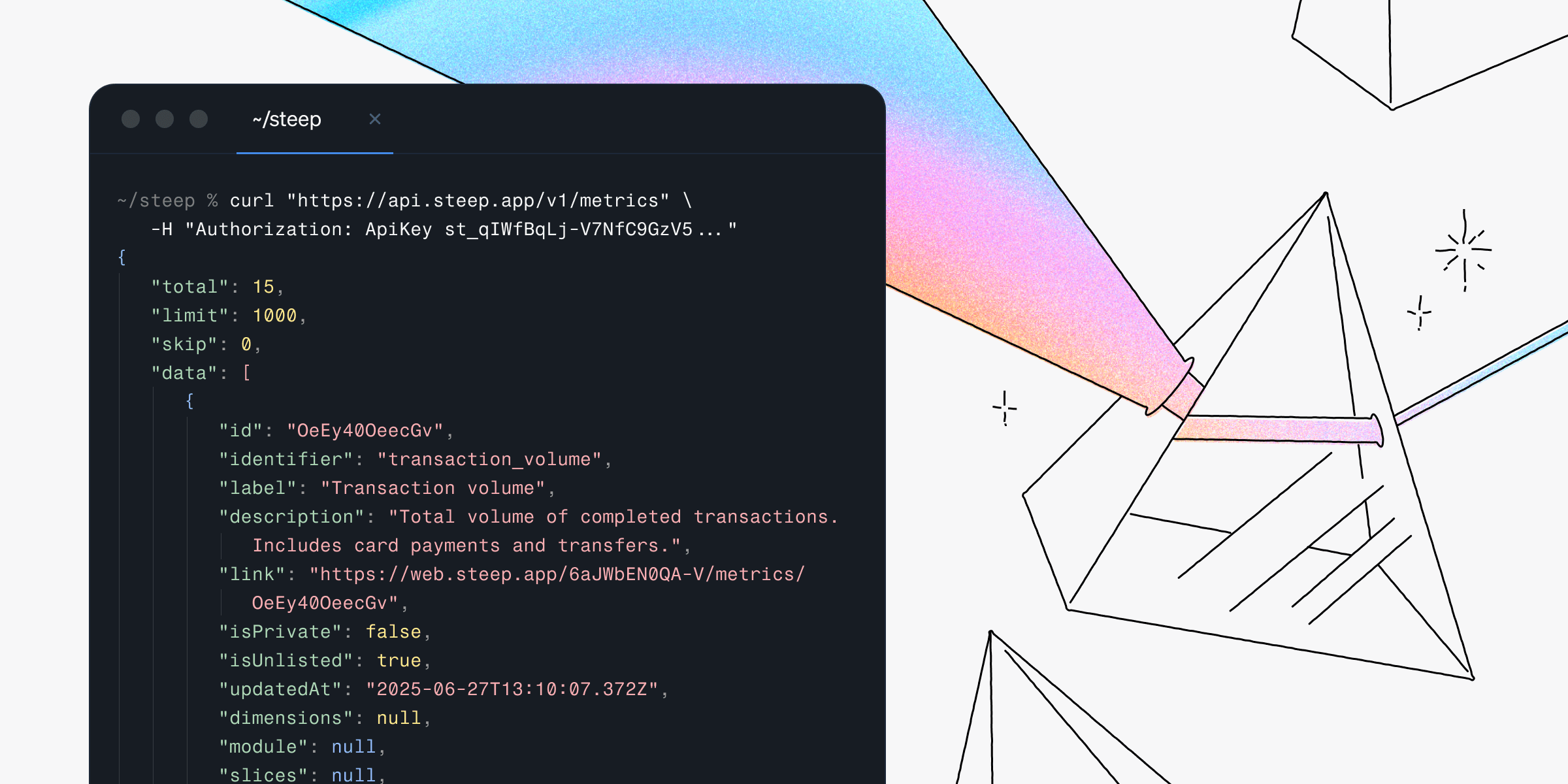
New in Steep: API – Metrics power anything
By Nino Höglund·Product