
We’ve teamed up with dbt Labs to bring you a complete semantic stack! With the new integration, you can now connect Steep to the dbt Semantic Layer via dbt Cloud. This lets you build your semantic layer with code in dbt Cloud and publish your metrics to all your end users in Steep.

dbt Cloud & Semantic Layer
dbt needs no introduction - their SQL-first workflow is a key ingredient in the modern data stack, and with the dbt Cloud platform, data teams get a powerful set of tools to ship data reliably and at scale. With the new dbt Semantic Layer, you can now also define your metrics right next to your dbt models and use them to power multiple use cases.
With the dbt Semantic Layer you get:
- Metrics in code: Define your metrics and semantic models as code in easy-to-configure YAML files
- Lineage all the way: Metrics are automatically added to your project’s lineage, making it simple to check upstream and downstream dependencies.
- Powerful setup: Using the dbt Semantic Layer, you can connect your metrics to multiple tools and use cases alongside Steep, such as notebooks, ML models, or data apps.
Steep
Steep is the modern BI tool built natively for the semantic layer and metrics. Steep allows you to ship your metrics catalog to all your end users and empower them to work and collaborate together. The intuitive UI lets anyone in your company, from analysts to executives, dig into data and answer their own questions.
With Steep, you get:
- Metrics-first BI: Solve all of your organization's BI needs using metrics as the core building block. No need for analysts to answer repetitive questions or build custom dashboards.
- Built-in consistency: When you change your metric definitions centrally, all content that’s ever been created will get updated. All numbers are consistent by default.
- Powerful analysis: Combine and compare any number of metrics. Break down, drill down, and switch time grain. Easily overlay targets, annotations, and comparisons over time.
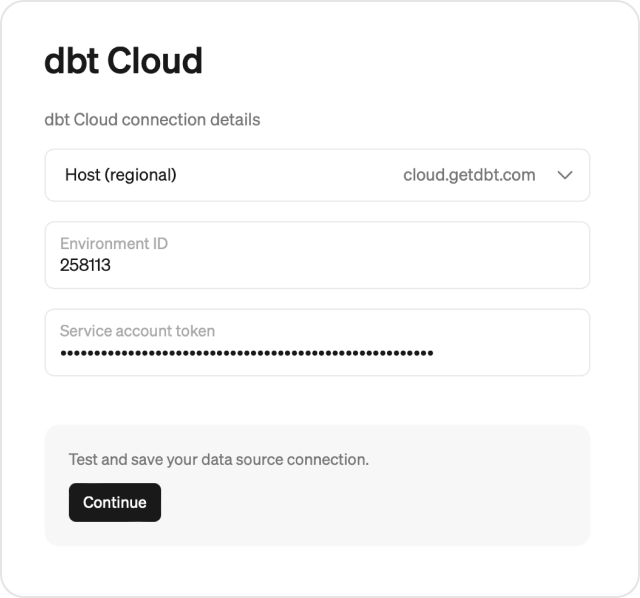
A seamless integration
The integration is designed to be smooth from setup to usage. Here’s how it works:
- You define metrics using the dbt Semantic Layer and connect them to Steep in minutes via dbt Cloud API.
- All your metrics in dbt Cloud are added to Steep immediately and are available to your entire Steep workspace
- From the end user perspective, everything works exactly the same as with native metrics in Steep👌
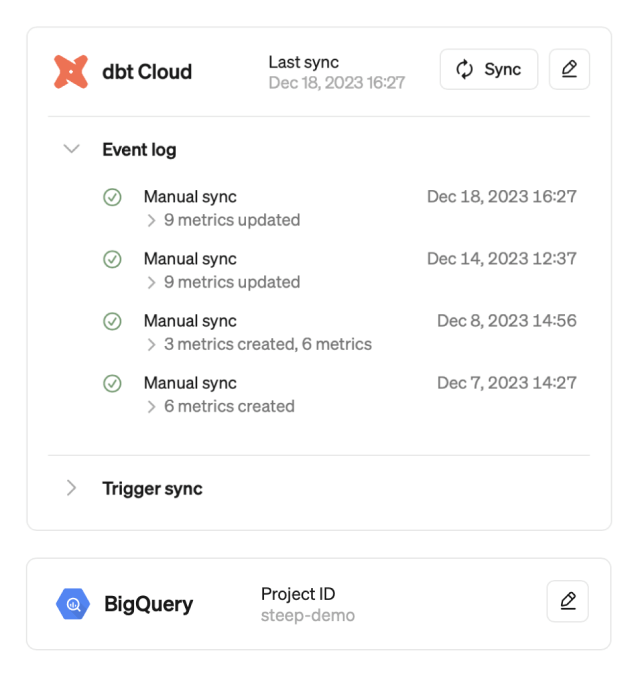
Hybrid setup works great
Can I have both Steep native metrics and external ones at the same time? Yes, you can, the two approaches work really great side-by-side. A hybrid setup is useful for:
- Easily migrating metrics from UI-based to code-based
- Keeping core metrics version-controlled in code and allowing analysts to iterate on newer metrics with the Steep UI
The semantic stack
At Steep we want the semantic stack to work really well end-to-end, and so instead of creating multiple competing standards, we are working toward making the solutions in the space work really well together. No matter how you choose to build your semantic layer, Steep will enable you to ship your metrics to your users and empower them to do their BI work together.
Stay tuned for more in this space.
Book a demo
Get help with exploring the platform and discussing use cases for your team.
Get started
Explore for free. Get your own workspace or try the demo setup.
More posts

Intro to Steep
By Janna Pollari·Events

Webinar with Daana
By Janna Pollari·Events

Meet us at Snowflake Summit 2026
By Deanne Anderson·Events
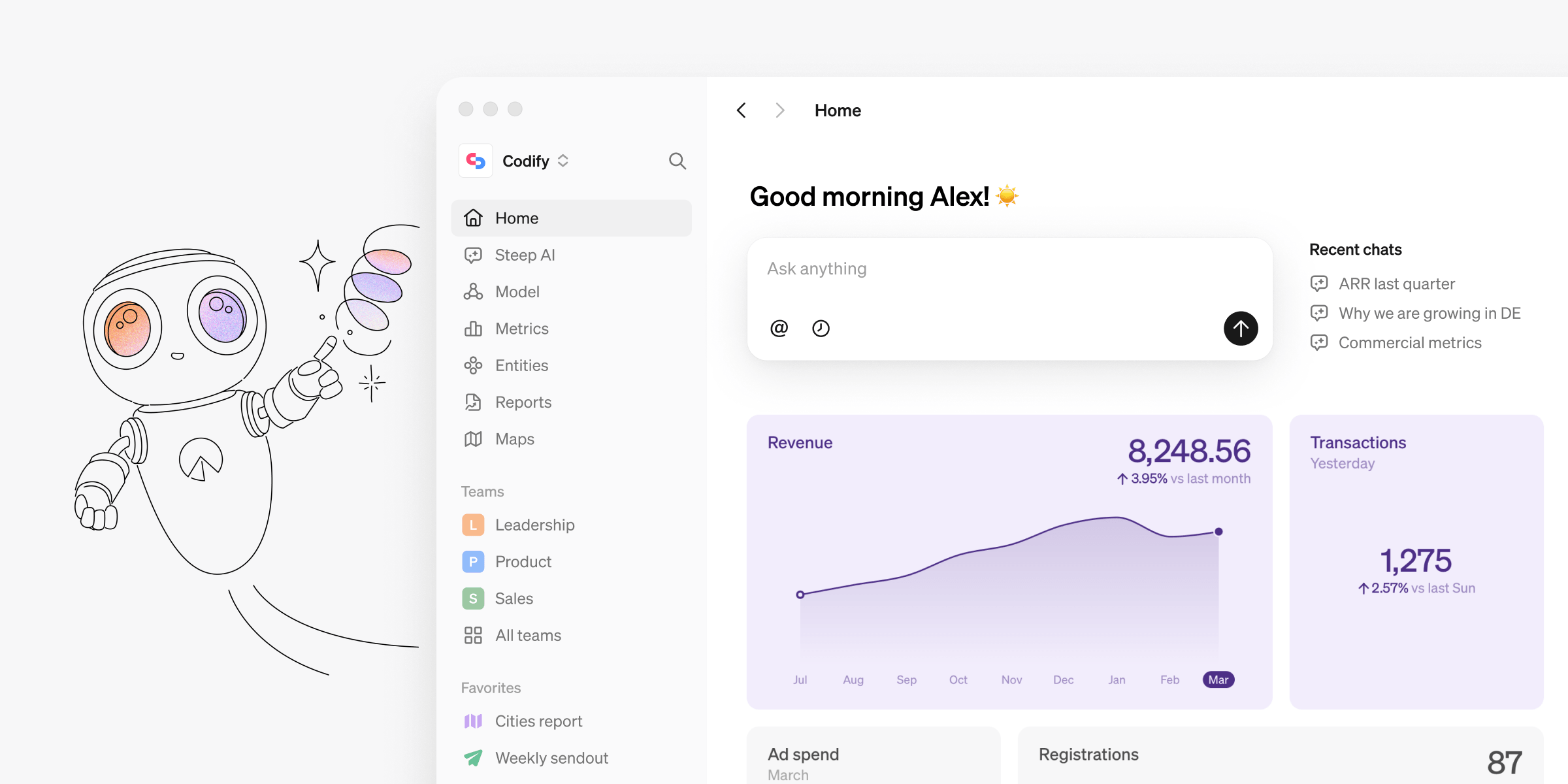
Introducing Steep AI
By Nino Höglund·Product

A builder's guide to the Steep API
By Hanna Kjellén·Inside Steep
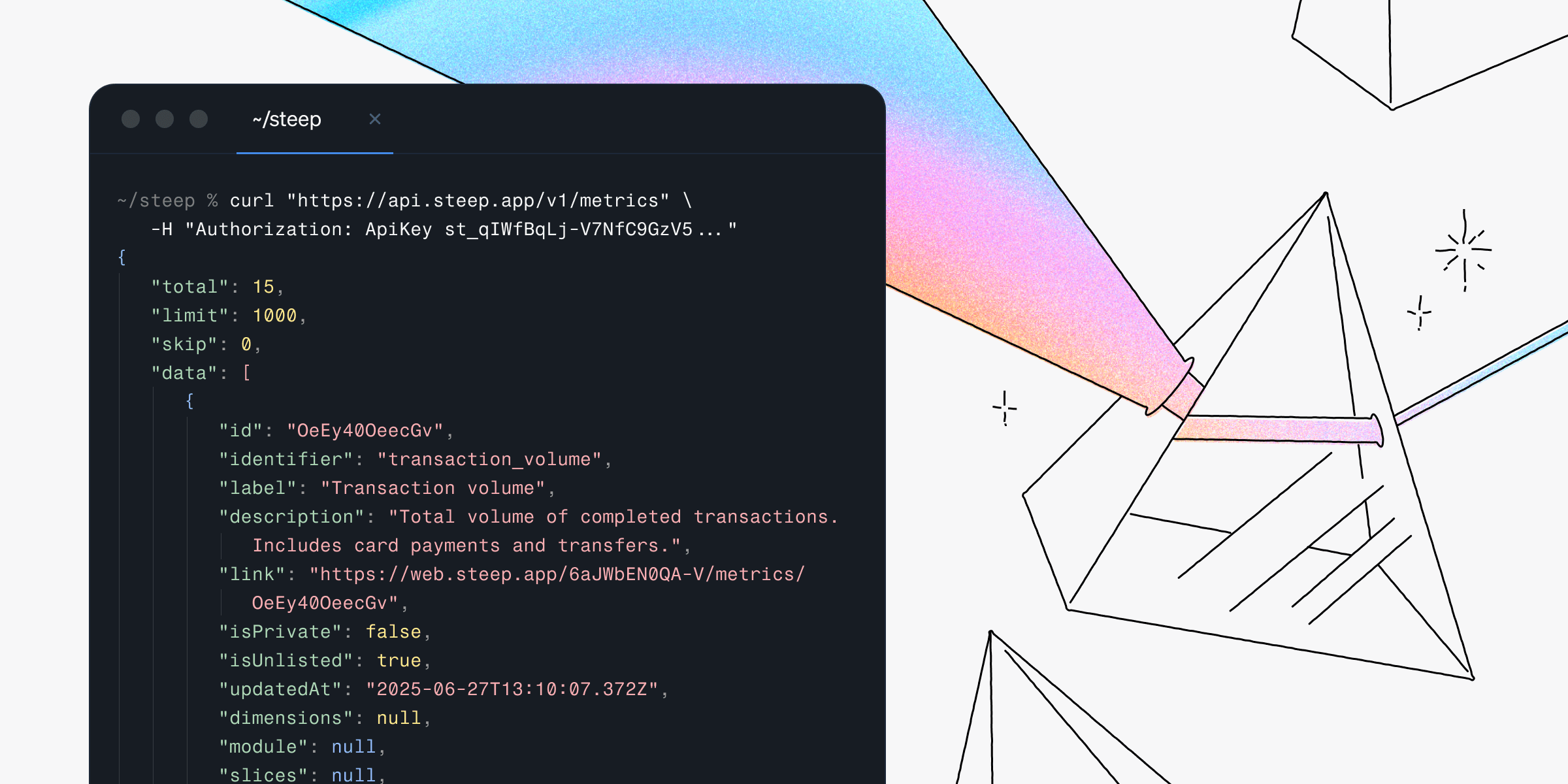
New in Steep: API – Metrics power anything
By Nino Höglund·Product