July 23, 2026
API & MCP improvements
The Steep API and MCP keep expanding. Reports join the programmatic surface, metrics get more precise endpoints and filters, and server-to-server integrations get a dedicated way to authenticate - all still governed by your semantic model.
Reports in the API and MCP: Create, list, and read reports programmatically - the same capabilities that power Reports in Steep AI.
Individual metric endpoint: Fetch a single metric with GET /metrics/:id, also available as a tool in the MCP.
Filter what you fetch: Filter the metrics list by an array of identifiers across list endpoints, and use the new parameters on /targets to get just the target series you need.
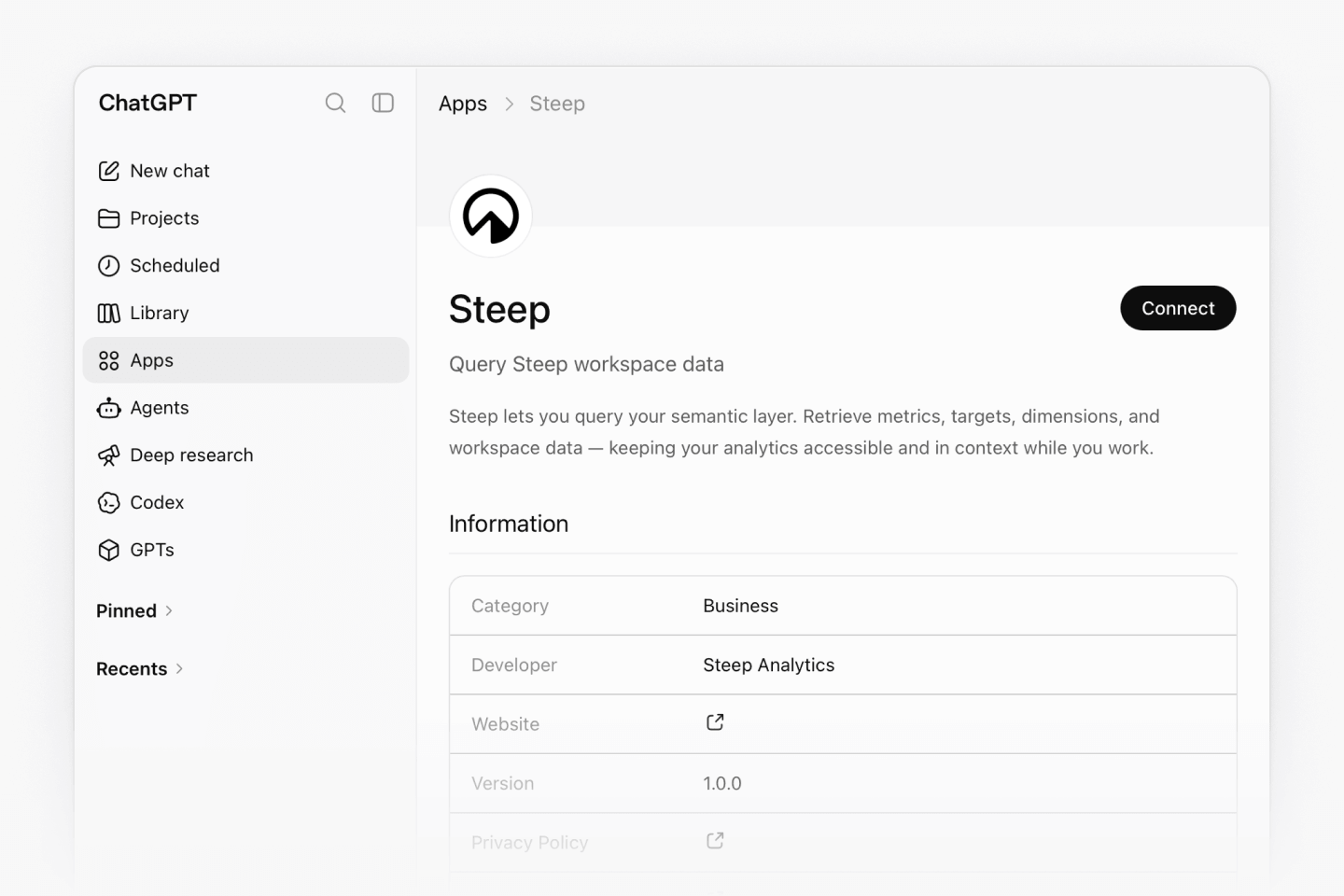
Steep in the ChatGPT app store
Steep is now available directly in the ChatGPT app store - connect your workspace and query your governed metrics without leaving ChatGPT.
New authentication options
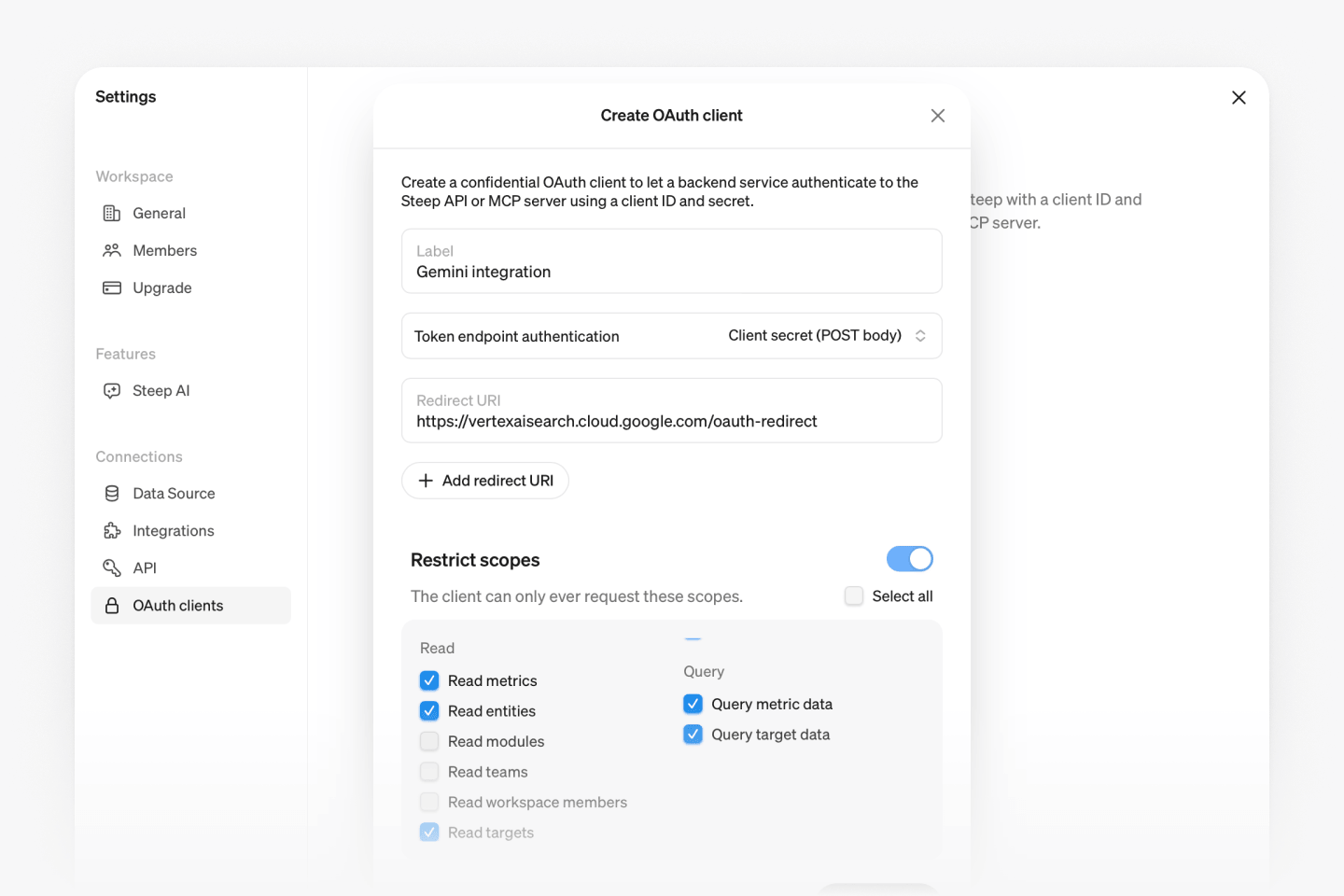
Confidential OAuth clients: A new way to authorize server-to-server integrations. Create a client with an ID and secret to connect trusted backend services to the Steep API or MCP server - no user in the loop. This also enables the Steep MCP server to be used with Gemini Enterprise.
Multiple API keys: Create several API keys per workspace, each with its own permissions - one key per integration, scoped to exactly what it needs.
Improvements & fixes
MCPReduced MCP token footprint for metrics and targets, so agents spend their context on analysis instead of payloadsAPIThe API now accepts standard Authorization: Bearer headers alongside API keysAPIAPI rate limits are now per workspace, tiered by planAPIImproved and more specific API error messagesAPIRequests with deleted API keys return a proper 401APIDerived ratios are no longer exposed as malformed custom-ratioAthenaMulti-schema supportAthenaDate filters cast properly instead of failing with type errorsdbtWhen using dbt as the semantic layer, to-date comparisons now work correctly